RAIN
SELECTED VISUAL STORY / 2026
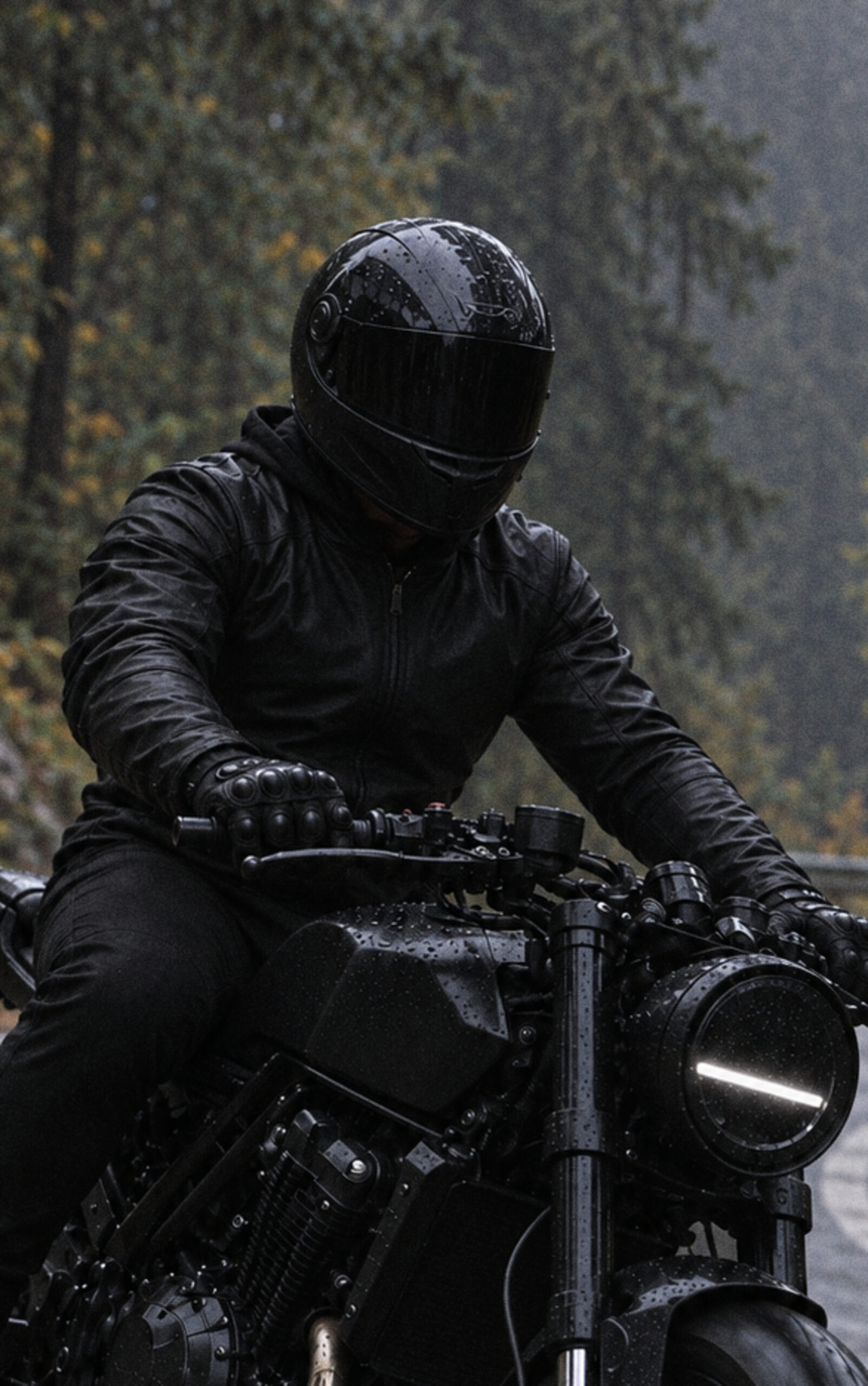
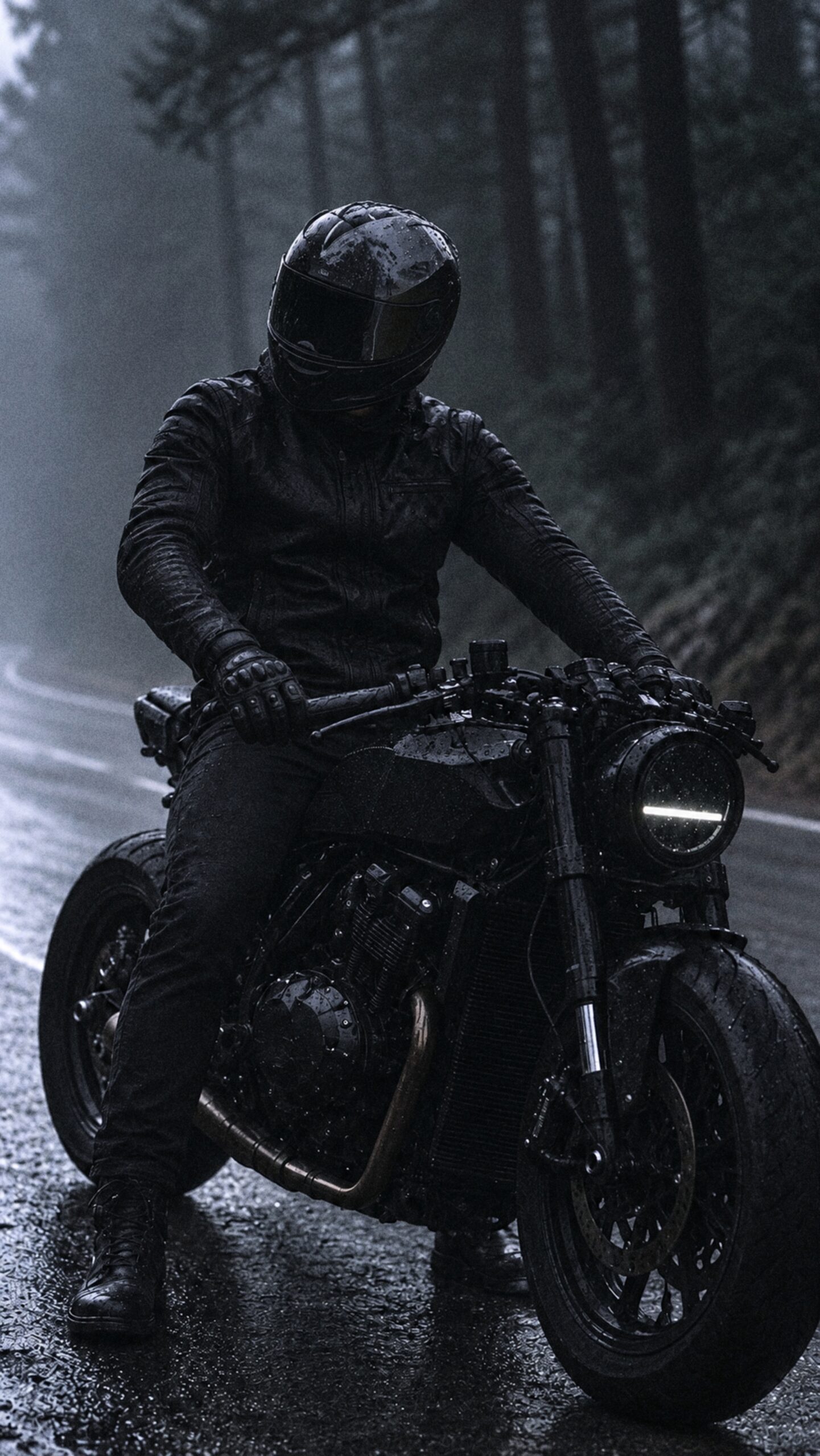
BLACK RAIN begins with a simple idea: remove the noise and let presence do the work. The palette stays almost entirely black. The road is wet, the forest recedes into mist, and the motorcycle becomes part of the silhouette rather than a separate object competing for attention.
For Firat Zan, the result is less about portraying a rider in motion and more about building a controlled screen image. The body language is contained, the styling is stripped back and the visual tension comes from contrast — dark clothing against reflected light, hard mechanical lines against a soft natural background, stillness against the expectation of speed.
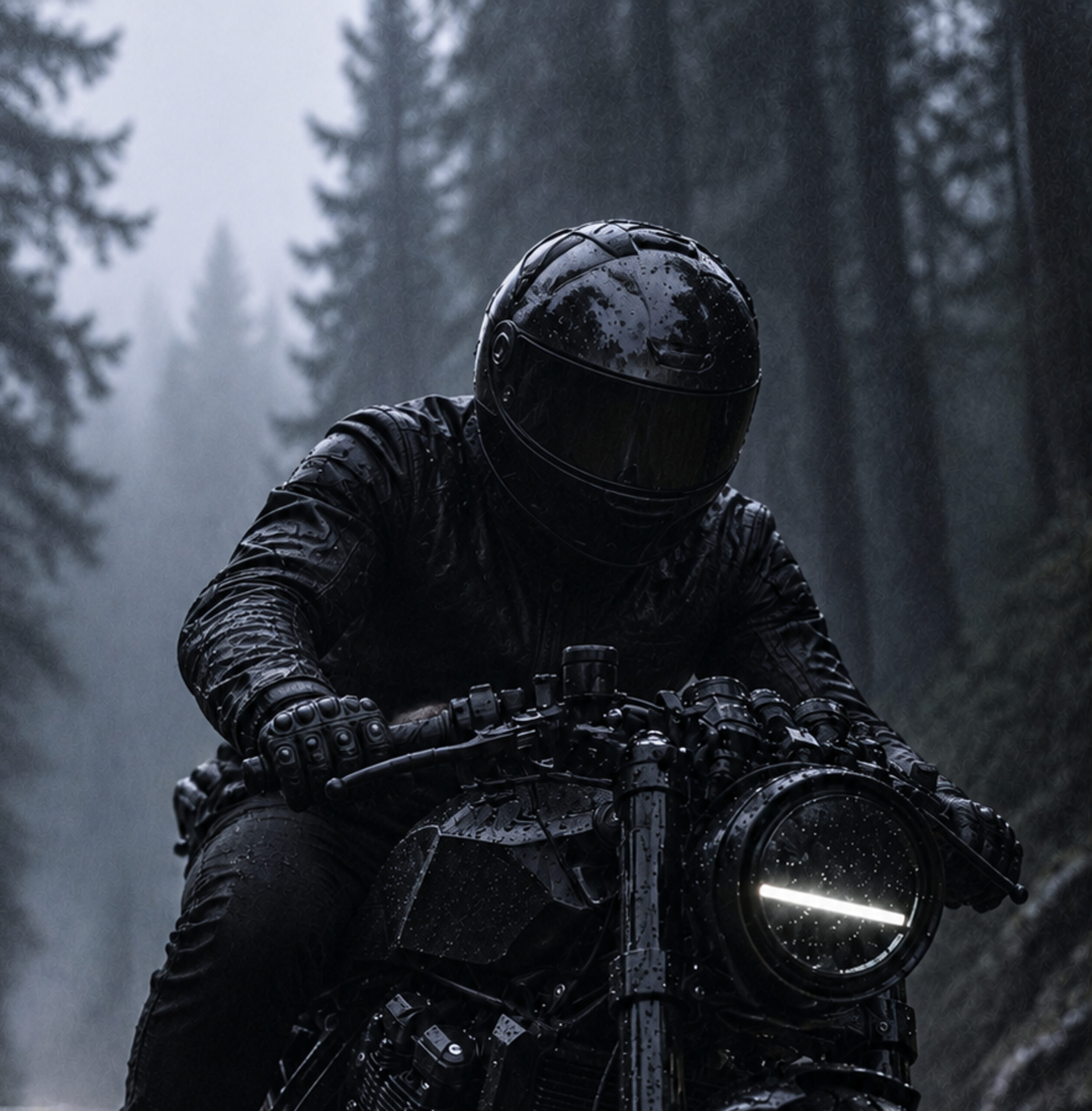
Motorcycle imagery can easily become costume. BLACK RAIN takes the opposite route. There is no attempt to overload the frame with logos, bright colour or exaggerated attitude. Instead, the wardrobe, helmet and machine are treated as one tonal system.
That restraint is what gives the sequence its editorial character. Wet fabric, gloss on the helmet, metal, rubber and road reflections create separation without breaking the monochrome identity.
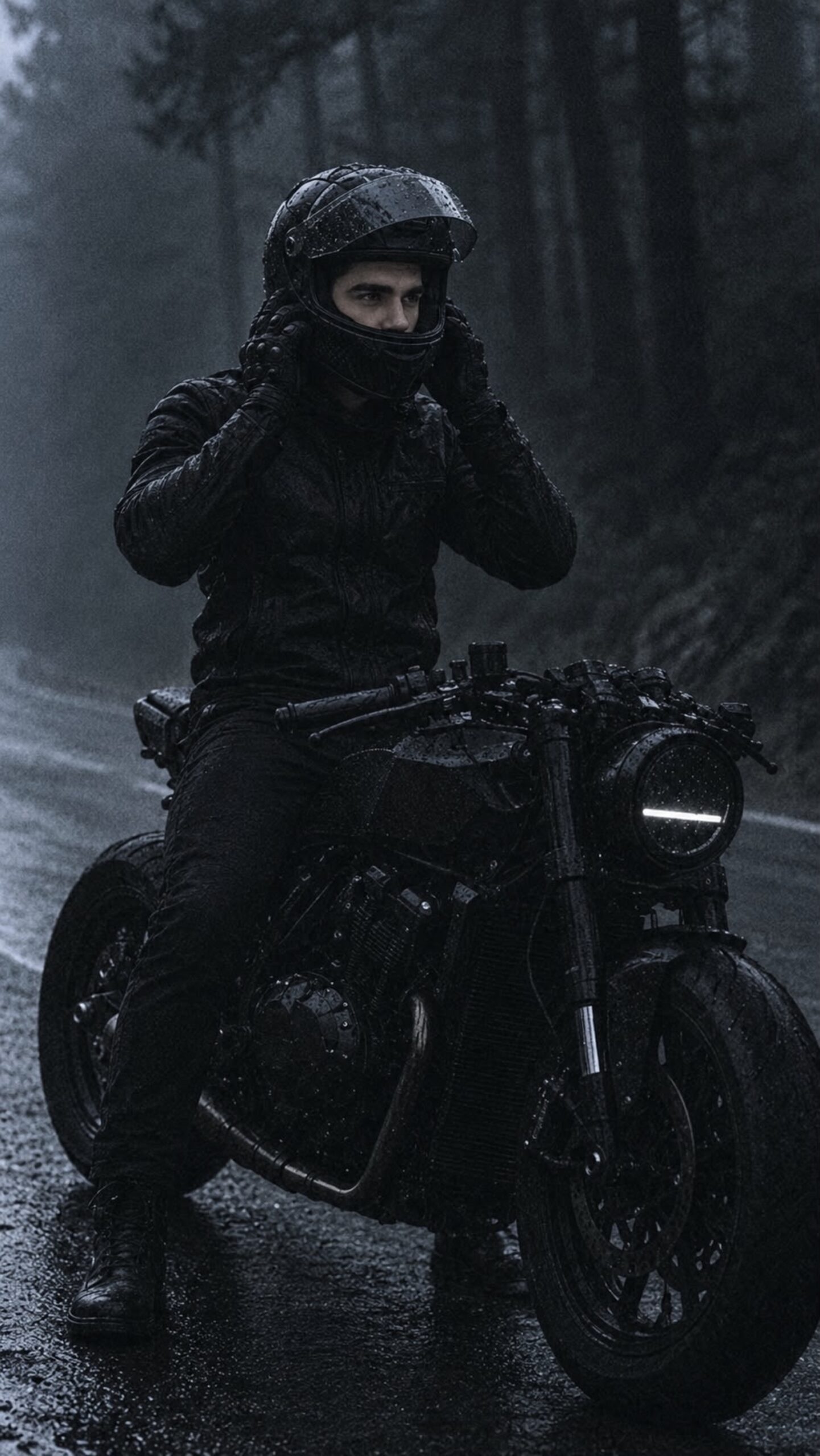
The strongest frame is the one in which the face becomes visible. It gives the story a human centre and keeps the visual from becoming anonymous. The fully closed visor images then work as contrast: less portrait, more symbol.
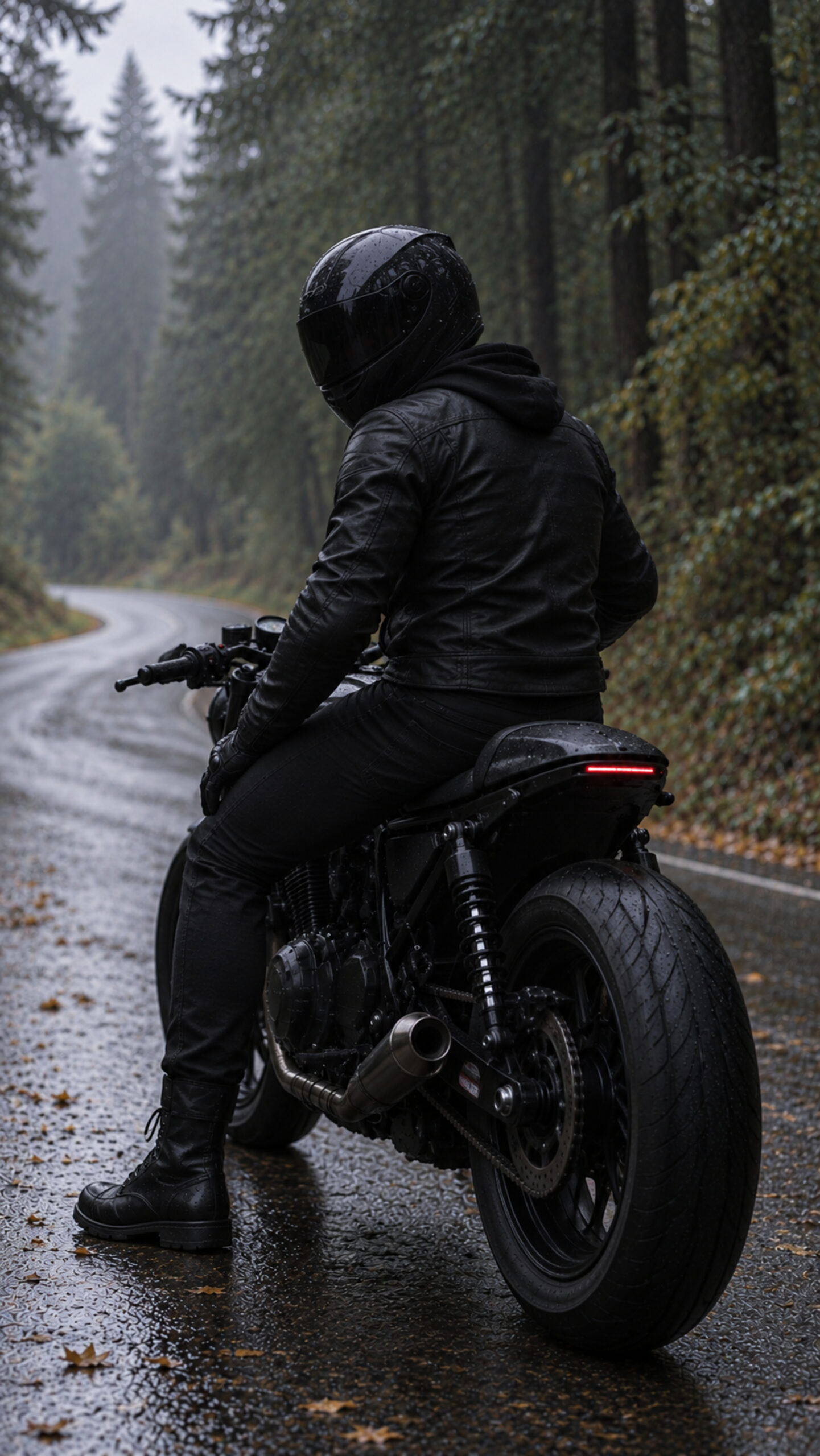
What reads as controlled atmosphere on the final page was built under much less controlled conditions. The BLACK RAIN session ran for roughly six hours as the weather shifted through mist and steady rain, repeatedly changing the reflective quality of the road, the motorcycle and the black wardrobe.
Rather than fighting the weather, the production used it. Rain darkened the forest, softened distant detail and created natural highlights across the helmet, tank and wet asphalt. The team worked in short windows between heavier bursts, resetting the bike, drying critical surfaces and returning to the same visual language as the light changed.
The portrait-led frames were built around a Sony A7 IV with an 85mm prime lens. The longer focal length compressed the forest into a denser background and kept attention on expression, posture and silhouette. Most of the look was shaped in-camera through selective focus, overcast ambient light and restrained exposure, with the final grade keeping blacks deep while preserving texture in skin, fabric, metal and rain.
As a personal branding piece, BLACK RAIN is designed to communicate quickly. The visual codes are immediate: restraint, physical presence, risk, discipline and control.
Editorial images now live far beyond a single page. They move between portfolio, press materials, social media, casting references and screen-facing profiles. A coherent visual concept creates more value than a collection of unrelated photographs because every frame reinforces the same identity.
In this series, the motorcycle gives the story energy without turning it into a vehicle campaign. The forest gives it scale without becoming a travel feature. Everything serves the same central objective: a concise, cinematic portrait of Firat Zan.