
Dubai has reached a point where the investment case is no longer based only on futuristic architecture, lifestyle or marketing. The strongest argument for the city today is more fundamental: liquidity, international demand, rental depth, long-term residency options, a competitive tax environment and a government strategy built around attracting capital, businesses and people.
I have always believed that a real estate market should be judged by what exists behind the buildings. Who is moving there? Who is renting? Is capital entering or leaving? Is the city creating jobs and infrastructure? Can an investor exit when needed? Dubai is attractive because many of those answers are currently moving in the same direction.
That does not mean every apartment in Dubai is automatically a good investment. It means the city deserves serious consideration as part of an international property strategy — provided the investor chooses the right location, project, developer and entry price. For the underlying transaction, rental and luxury-market data behind this view, read my Dubai real estate market outlook for 2026.
1. Dubai now has the scale and liquidity serious investors look for.
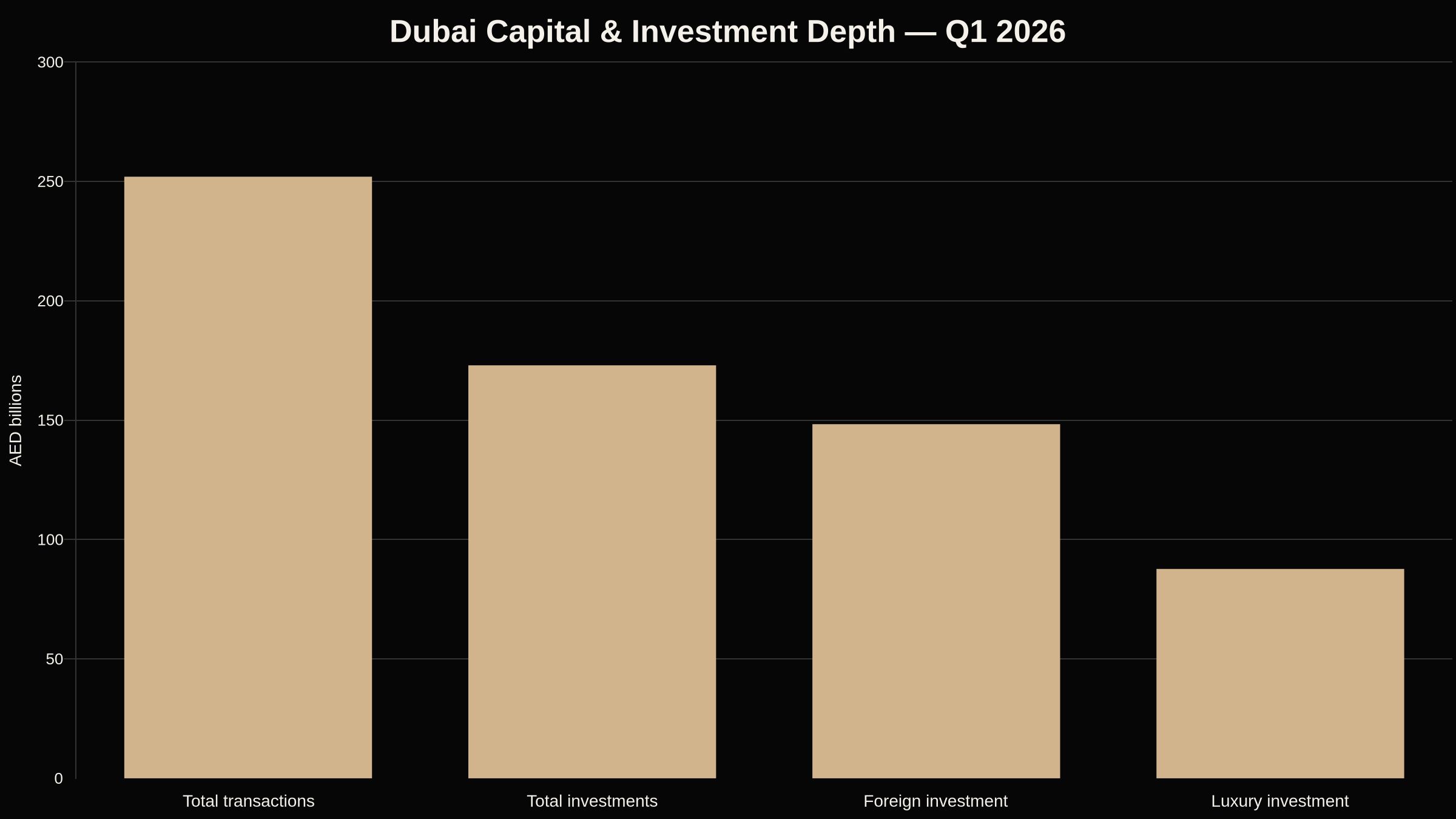
One of the biggest differences between a property market that looks attractive and one that is actually investable is liquidity. A beautiful property is not enough if the market around it is too thin. Dubai's current transaction data shows a market operating at significant scale.
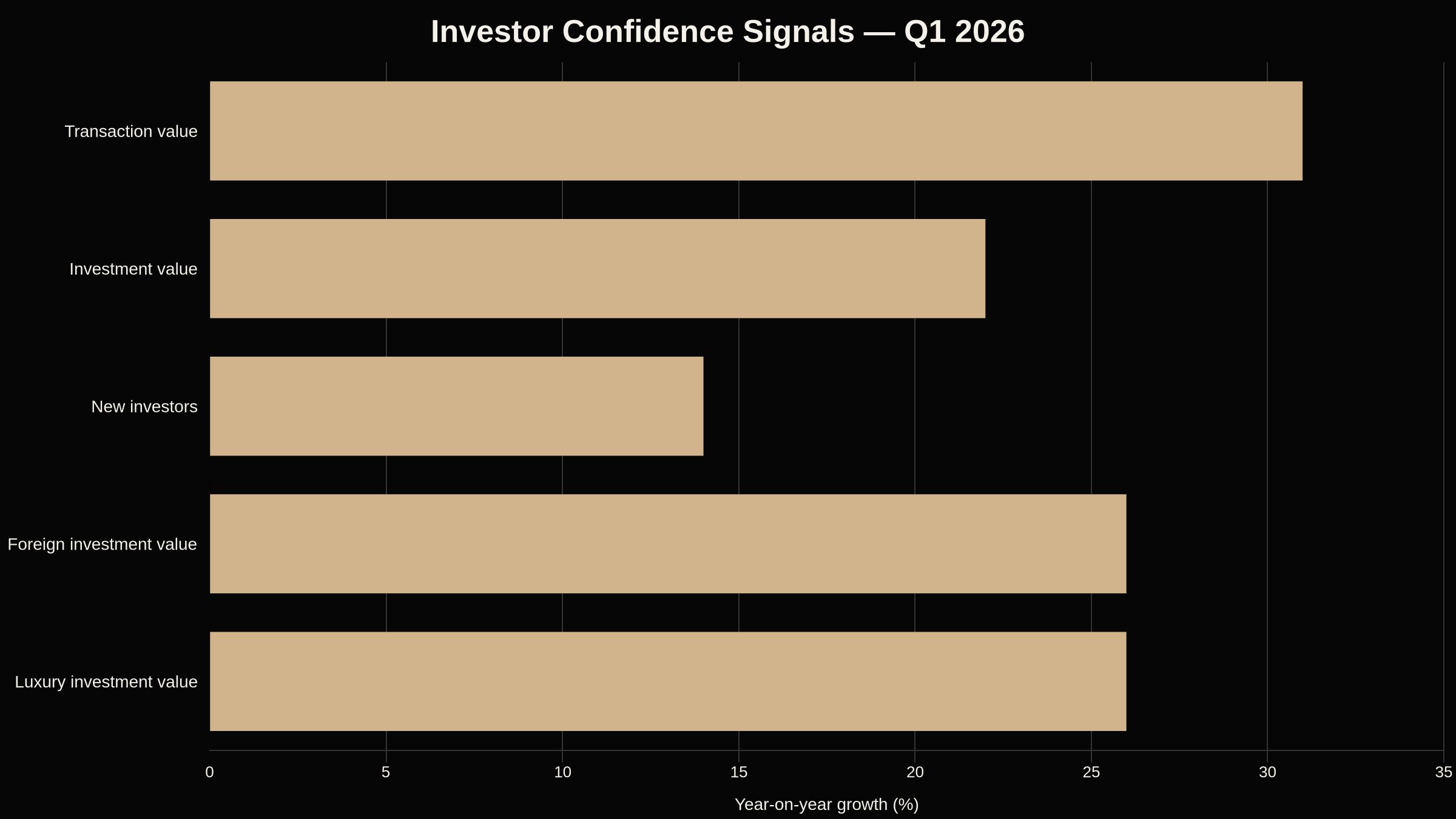
Dubai Land Department reported AED 252 billion in total real estate transactions in the first quarter of 2026, a 31% increase in value from the same period a year earlier. DLD source. Transaction volume reached 60,303. Real estate investments totalled AED 173 billion across 57,744 investments.
The investor base itself also expanded to 48,448 investors, while the number of new investors reached 29,312, up 14%. For me, this is one of the most important signals: demand is not being generated only by the same owners trading among themselves. New capital is continuing to enter the market.
2. International capital is still moving toward Dubai.
Dubai has always been international, but the current property cycle is increasingly global in both scale and buyer profile. DLD reported that foreign real estate investment value reached AED 148.35 billion in the first quarter of 2026, up 26% year on year. The number of foreign investments also increased 11%.
This matters because global capital creates a broader pool of demand. Dubai does not depend on one nationality, one industry or one local buyer group. Investors, entrepreneurs, executives, professionals, families and high-net-worth individuals arrive for different reasons, yet all of them can create demand for housing.
Knight Frank's review of 2025 also showed the scale of the residential market: approximately 205,400 residential sales were recorded during the year, up 18%, while total sales value rose 25% to AED 544.2 billion. Knight Frank source. At the very top of the market, 500 homes priced above US$10 million changed hands in 2025.
You do not need to buy a US$10 million property for this to be relevant. A deep luxury market strengthens Dubai's international brand and helps attract businesses, wealth managers, family offices and affluent residents — all of which support the wider ecosystem.
3. The rental market gives Dubai a genuine income story.
Capital appreciation attracts headlines, but rental demand is what makes a property investment function month after month. Dubai's leasing market remains one of the strongest reasons to take the city seriously.
According to Dubai Land Department, 1.38 million tenancy contracts were registered in 2025, up 6% in volume, with a total value of AED 126.4 billion — a 17% increase from 2024. DLD rental source. New tenancy contracts exceeded 513,000, an increase of 10%.
CBRE reported that average residential rents across Dubai increased 6.2% during 2025, while residential sale prices increased 12.9%. Knight Frank's community data showed one-bedroom annual rents at the end of 2025 ranging from around AED 78,000 in Jumeirah Village Circle to AED 133,000 in Downtown Dubai among the high-volume communities it tracked.
The important point is not that rents rise every year — they will not. The important point is that Dubai has a large, mobile tenant population and a constant inflow of people who need housing. That gives investors multiple strategies: long-term leasing, furnished leasing in appropriate areas, or eventual owner occupation.
4. The tax environment improves the economics of ownership.
The UAE's tax framework is another structural advantage. The official UAE government portal states that the country does not levy personal income tax on individuals. For property investors, that can make the relationship between gross rental income and retained income more attractive than in many heavily taxed global cities.
However, “tax efficient” should never be confused with “cost free.” Dubai property owners still need to calculate acquisition and registration costs, service charges, maintenance, insurance, management, furnishing, vacancy and financing costs where applicable. An investor may also have tax obligations in another country depending on residence, citizenship and personal circumstances.
This is why I prefer to compare investments on a net basis rather than being impressed by a headline gross yield. The real question is simple: after all recurring costs, what does the asset actually produce?
5. Property can also become part of a long-term residency strategy.
Dubai property can offer something that many traditional investment markets cannot: the possibility of connecting an asset purchase with long-term residency.
Dubai Land Department's current Golden Visa service states that a real estate investor owning one or more properties with a purchase value of at least AED 2 million may apply for a renewable 10-year residence permit, subject to the applicable conditions. DLD Golden Visa source. The service also provides for sponsorship of a spouse, children and parents. Mortgaged property can qualify under the DLD rules when the required paid amount is evidenced by the bank.
For an international investor, this changes the nature of the purchase. The property is no longer only a financial asset. It can also become part of a plan for residence, business activity, family mobility and long-term geographic diversification.
6. Tourism and global connectivity continually replenish demand.
Dubai welcomed 19.59 million international overnight visitors in 2025, according to the Dubai Department of Economy and Tourism, a 5% increase from the previous year's record. Dubai Media Office source. Tourism alone does not determine property values, but it has an important secondary effect.
Millions of visitors are repeatedly exposed to Dubai as a place to holiday, work, open a company, relocate or buy a second home. Some become tenants. Some become residents. Some become investors. That constant international circulation is difficult to replicate in a market that relies primarily on domestic demand.
The city's infrastructure amplifies this effect. Dubai has spent years building an ecosystem around international movement — aviation, hospitality, business districts, free zones, major events, healthcare, education, retail and large master-planned residential communities. Real estate benefits because the city is designed to keep attracting people rather than simply selling buildings.
7. Off-plan property creates flexibility — but only for disciplined buyers.
Dubai's off-plan model is one of the reasons the market attracts investors with very different capital structures. Developers often offer staged payment plans that allow a buyer to deploy capital over the construction period rather than paying the entire purchase price at once.
Used correctly, this can create flexibility. An investor may gain exposure to a new district while infrastructure, retail and population build around it. But the same structure can encourage weak decisions when buyers focus only on the monthly payment rather than the actual asset.
My own approach is to look beyond the brochure: developer execution history, escrow and registration status, master developer quality, supply in the immediate area, realistic handover timing, service-charge expectations, floor plan, view protection, parking, transport access, resale competition and what the unit will be worth to a real tenant after handover.
The payment plan should support the investment thesis. It should never replace it.
8. Dubai offers several investment markets inside one city.
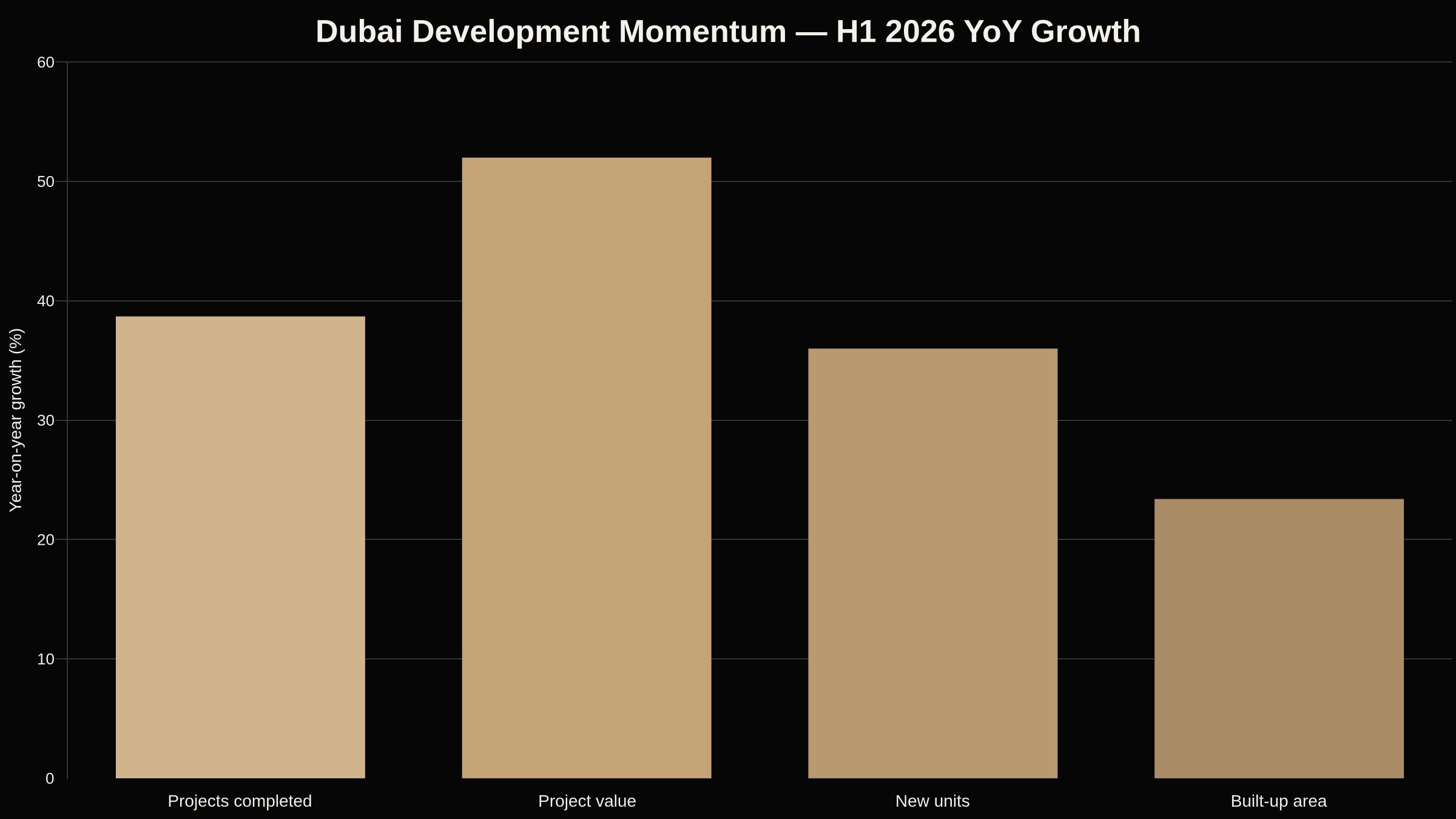
One reason Dubai works for different types of investors is that there is no single “Dubai market.” Downtown Dubai, Dubai Marina, Palm Jumeirah, JVC, Business Bay, Dubai Hills, Dubai South and emerging master communities can behave very differently.
An investor focused on cash flow may prefer a more affordable community with strong tenant turnover and a better rent-to-price ratio. Someone focused on capital preservation may prefer scarce prime land or waterfront property. A buyer with a five-to-ten-year horizon may accept construction risk in exchange for exposure to an emerging district.
This is where strategy matters more than hype. The best investment is not necessarily the most expensive tower or the newest launch. It is the property that most clearly matches the investor's objective.
9. The strongest Dubai investments are bought with an exit plan from day one.
Before I consider a property, I want to know who the next buyer or tenant is likely to be. If the answer is vague, the investment is already weaker.
I prefer assets that make sense under more than one scenario. If short-term resale becomes unattractive, can it be rented? If rents soften, is the location strong enough to hold demand? If the market becomes more selective, does the unit have something difficult to reproduce — a superior layout, established view, walkability, transport access, waterfront position or limited supply?
- Location: proximity to employment, transport, schools, leisure or established lifestyle demand.
- Developer: delivery record, build quality, after-sales service and reputation.
- Supply: how many competing units will exist at handover and during resale.
- Net yield: rent after service charges, management, maintenance, vacancy and financing.
- Exit liquidity: whether the price point is accessible to a broad enough buyer pool.
10. A bullish view still requires respect for risk.
I remain positive on Dubai, but no serious investor should pretend the market has no risks. Strong years can create overconfidence, and rapid development means supply must always be monitored.
Knight Frank's registered project pipeline suggested that more than 160,000 residential units could theoretically enter the market during 2026, although the consultancy also noted that actual completion is likely to be much lower because projects are frequently delivered later than originally scheduled. That supply pipeline is exactly why area selection matters. A city can remain strong while individual buildings or districts underperform.
Other risks include developer delays, service-charge inflation, changing rental conditions, interest-rate exposure for leveraged buyers, currency risk for investors whose income is in another currency, and buying at a premium simply because a project is heavily marketed.
The correct conclusion is not that Dubai is risk-free. It is that Dubai currently combines enough structural strengths to justify accepting carefully selected property risk.
Why I remain bullish on Dubai.
As someone who has invested across Turkey and Dubai, I look at property less as a status object and more as infrastructure for financial freedom. The ideal asset should either produce income, preserve and grow capital, create strategic flexibility — or, preferably, do several of those things at once.
Dubai is compelling because the property sits inside a much larger growth story. International capital is arriving. Rental activity is deep. Tourism continues to set records. Long-term residency can be connected to qualifying property ownership. The tax environment remains competitive for individuals. New communities and infrastructure continue to expand the city.
Most importantly, Dubai still behaves like a city that is trying to become more important ten years from now than it is today. That forward ambition is one of the reasons I continue to see real estate here as more than a short-term trade.
For the right investor, at the right entry price, Dubai can combine rental income, capital appreciation potential, geographic diversification and lifestyle flexibility in a way few global property markets currently match.
This article is an investment perspective, not individualized financial, tax or legal advice. Property performance varies by project, location, purchase price, financing, operating costs and market conditions.
For a detailed breakdown of purchase fees, mortgage limits and net rental yield, read Dubai Property Investment Costs & ROI in 2026.
More perspectives on real estate, business and long-term investing are available in the Firat Zan Journal.